IoT Smart Waste Management: Lessons from Germany and What Malaysia Can Learn
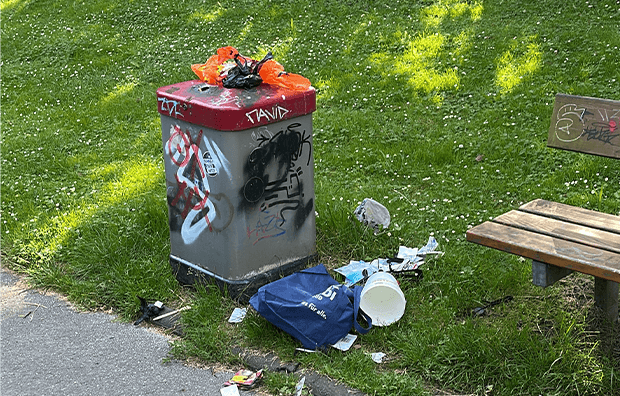
A city in Germany has demonstrated how combining LoRaWAN® sensors with artificial intelligence can transform something as mundane as rubbish collection into a precision operation — and the blueprint is directly applicable to Malaysian municipalities and industrial parks.
The Challenge: Blind Collection Routes
The City of Hürth, a municipality near Cologne with a population of around 60,000, faced a problem familiar to every local authority: waste collection trucks followed fixed schedules regardless of how full the bins actually were. The result was predictable — trucks wasted fuel and mileage emptying half-full bins on one street while bins on a busier thoroughfare overflowed and attracted illegal dumping. Resident complaints climbed, operating costs rose, and staff morale suffered from repetitive, inefficient work.
The Solution: 250 Sensors, Two Gateways, One AI Model
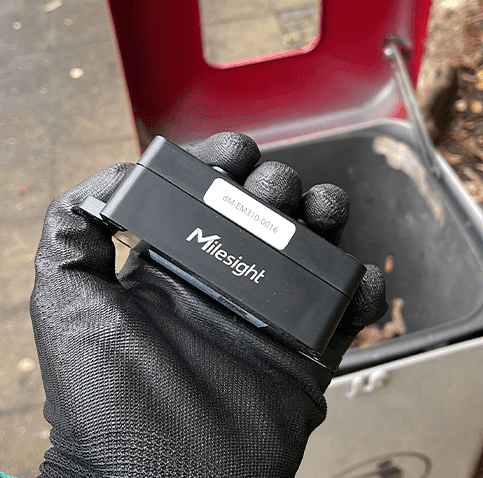
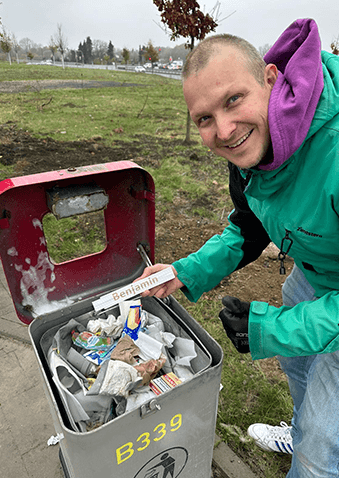
Working with local technology partner dataMatters GmbH, Stadtwerke Hürth AÖR deployed 250 Milesight EM310-UDL Ultrasonic Distance Sensors inside public waste bins across the city. The sensors measure the distance from the sensor head to the rubbish surface, giving a real-time fill level reading without any moving parts or consumables beyond a long-life battery.
Connectivity was handled through a hybrid LoRaWAN® network: two Milesight UG65 gateways owned by the municipality were supplemented by community-operated Helium gateways already covering much of the city. This meant the deployment required minimal new infrastructure investment.
The sensor data feeds into a federated AI model maintained by dataMatters. The model factors in location-specific variables — proximity to train stations, bus stops, kiosks, food stalls, and other footfall generators — to predict how full each bin will be the following day. Truck routes are then generated dynamically, dispatching crews only to bins that actually need attention.
Measurable Results
- 21% reduction in collection kilometres per week, directly cutting fuel consumption and CO₂ emissions.
- 61% drop in citizen complaints related to overflowing bins and illegal dumping.
- Improved staff experience — drivers follow purposeful demand-driven routes rather than repetitive fixed schedules.
- Federated AI architecture means predictive models can be shared with neighbouring municipalities without exposing sensitive operational data.
The project won a 2025 Milesight Impact Award, recognising it as one of the most effective real-world IoT deployments of the year.
How This Can Be Implemented in Malaysia
The Hürth deployment is not a showcase project built for a wealthy European city — it is a lean, cost-efficient system built on open standards, and every element of it maps directly onto Malaysia’s urban and semi-urban landscape.
The Problem Is Identical
Malaysian local councils (Majlis Bandaraya, Majlis Perbandaran, and Majlis Daerah) operate waste collection on fixed schedules inherited from decades-old practices. The result in Petaling Jaya, Shah Alam, Johor Bahru, Penang, or Kota Kinabalu is the same as it was in Hürth: overflowing bins at high-footfall spots like pasar malam sites, LRT stations, and food courts, while quieter residential bins get emptied whether they need it or not.
LoRaWAN® Infrastructure Is Already Growing
Malaysia has an expanding LoRaWAN® ecosystem. MyDigital Corporation and several state governments have been investing in smart city infrastructure, and the Helium Network has community-operated gateways in Klang Valley, Penang, and Johor. A city like Hürth needed only two municipal gateways to cover gaps in the Helium network — a Malaysian municipality could adopt the same hybrid model with minimal CAPEX.
The Sensors Are Proven for Malaysian Conditions
The Milesight EM310-UDL carries an IP67 rating, meaning it is fully dust-tight and withstands immersion — essential for Malaysia’s year-round high humidity and heavy tropical downpours. The ultrasonic measurement technology is unaffected by the colour, texture, or composition of the waste below it, and the long battery life means no recurring maintenance visits just to swap cells.
Staged Rollout Path for Malaysian Municipalities
A practical Malaysian implementation could follow three phases:
- Pilot (3–6 months): Instrument 30–50 high-footfall bins in a single zone — around a transit hub, a pasar malam corridor, or a commercial district. Establish baseline data on fill patterns and validate sensor performance in tropical conditions.
- Zone rollout (6–18 months): Expand to the full municipal area or an entire industrial estate. Integrate data into the council’s existing operations management system or a dedicated IoT dashboard.
- Predictive optimisation: Once 6–12 months of location-specific fill-level data has been collected, introduce predictive routing logic — either using a platform like dataMatters’ or a local analytics partner — to drive route optimisation and reduce truck kilometres.
Commercial and Industrial Estates
Beyond public councils, Malaysian industrial parks and mixed-use developments (think IOI City, Sunway, EcoWorld, or MIDA-registered industrial zones) face the same challenge with centralised bin points and scheduled contractor pickups. A sensor-driven system allows estate management to move to service-on-demand contracts, reducing contractor costs and improving cleanliness KPIs — a direct bottom-line benefit.
Alignment with National Agenda
The Malaysian government’s MyDIGITAL initiative and the Malaysia Smart City Framework both identify smart waste management as a priority vertical. IoT-based bin monitoring directly supports Sustainable Development Goal 11 (Sustainable Cities) and contributes to Malaysia’s net-zero and circular economy commitments under the 12th Malaysia Plan.
Getting Started
Riajati is an authorised partner for Milesight IoT solutions in Malaysia. The same EM310-UDL sensors and UG65 gateways deployed in Hürth are available locally, with full technical support for integration into LoRaWAN® networks and downstream data platforms. Whether you are a municipal council exploring a pilot, a property developer planning a smart estate, or a waste contractor looking to offer differentiated services, we can help you scope and deploy a system tailored to your environment.
Contact us to discuss how smart waste monitoring can work for your city or facility.
Source: Milesight — Smart Waste Management in a German City (Hürth)