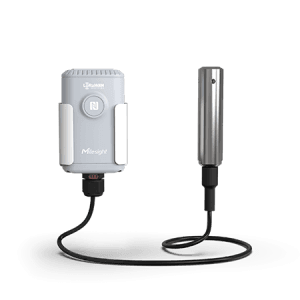
Biral BTD-350 Thunderstorm Detector
Standalone thunderstorm detector with 83km range, pre-flash overhead lightning warning, and <2% false alarm rate. Detects all lightning types via passive quasi-electrostatic sensing. IP66, CE, FAA, IEC 62793 Class A compliant. Suitable for aviation, marine, and industrial applications.
Description
Standalone Thunderstorm Detection to 83km
The BTD-350 Thunderstorm Detector by Senseca UK (formerly Biral) is a standalone sensor that reliably detects all forms of lightning activity within a range of 83km (45 nautical miles). Its unique quasi-electrostatic operating principle delivers an exceptionally low false alarm rate and — uniquely — the ability to warn of overhead lightning risk before the first discharge occurs.
Key Features
- 83km Detection Range — Exceeds US FAA requirements for aerodrome use
- Pre-flash Warning — Detects strong electric fields and charged precipitation to warn of lightning risk before the first strike
- All Lightning Types — Detects cloud-to-ground, cloud-to-cloud, and intra-cloud lightning discharges
- Very Low False Alarm Rate — Passive electrostatic principle is immune to radio interference (the primary cause of false alarms in traditional detectors)
- High Detection Efficiency — 95% for single flash; 99% for storms with 2 flashes; 99.9% for storms with 3+ flashes
- Rapid Response — Lightning flashes detected and ranged within 2 seconds; electric field alerts within 5 seconds
- Optional Direction Finder — Reports direction to nearest degree using electromagnetic wave detection (3kHz–1MHz band)
- Flexible Communication — Ethernet or RS422 serial output; ASCII data string for easy integration
- Virtually Maintenance Free — No moving parts; passive sensing principle
- Marine Certified — Salt spray, vibration, and EMC certified for on and offshore marine applications
- Aviation Compliant — Meets FAA performance requirements; supports enhanced CAP437 thunderstorm reporting
How It Works
The BTD-350 operates by sensing changes in the atmospheric electric field in the frequency band of 1–47 Hz — the electrostatic signature of lightning charge transfer, corona discharge, and strongly-charged aerosol movement. Because radio emissions occur at far higher frequencies, the sensor is inherently immune to radio interference. Mains power noise (50/60 Hz) is removed by both analogue and digital filtering.
Electric field disturbances from developing overhead thunderstorms can trigger a warning alert within 5 seconds — providing advance warning before any lightning has struck. Once lightning begins, each flash is detected, ranged, and logged within 2 seconds of initiation.
Technical Specifications
| Detection Types | Cloud-to-cloud, cloud-to-ground, intra-cloud |
|---|---|
| Detection Range | 83 km (51 statute miles / 45 NM) |
| Detection Efficiency | 95% (1 flash); 99% (2 flashes); 99.9% (3+ flashes) |
| False Alarm Rate | <2% (for flashes within 56km) |
| Range Accuracy | 0–20 km: ±5 km | 20–83 km: ±10 km |
| Max Flash Rate | 120 per minute |
| Time of Flash | Nearest 10ms (internal clock) |
| Direction (optional) | Reported to nearest degree |
| Output | Ethernet or RS422 Serial (ASCII data) |
| Power Supply | 110–240 Vac, 50–60 Hz Universal |
| Operating Temperature | -40°C to +60°C |
| Operating Humidity | 5%–100% RH |
| Protection Rating | IP66 |
| Sensor Weight | 25 kg |
| Measurement Principle | Passive, quasi-electrostatic — no moving parts |
Certifications & Compliance
- CE Certified — EMC General: EN 61326:2013
- CE Certified — EMC Marine: EN 60945:2002
- Corrosion resistance: EN 60945:2002 / EN 60068-2-52:1996
- Vibration: EN 60068-2-6:2008
- EN50536:2011+A1:2012 — Class 1 Detector
- IEC 62793 — Class A Detector
- RoHS and WEEE Compliant
Applications
- Aviation — airports, helipads, aerodrome weather stations
- Marine & offshore — vessels, rigs, ports
- Wind energy sites and solar farms
- Mining, construction, and outdoor industrial operations
- Sports venues, events, and recreation facilities
- Military and defence installations
- Meteorological and research stations