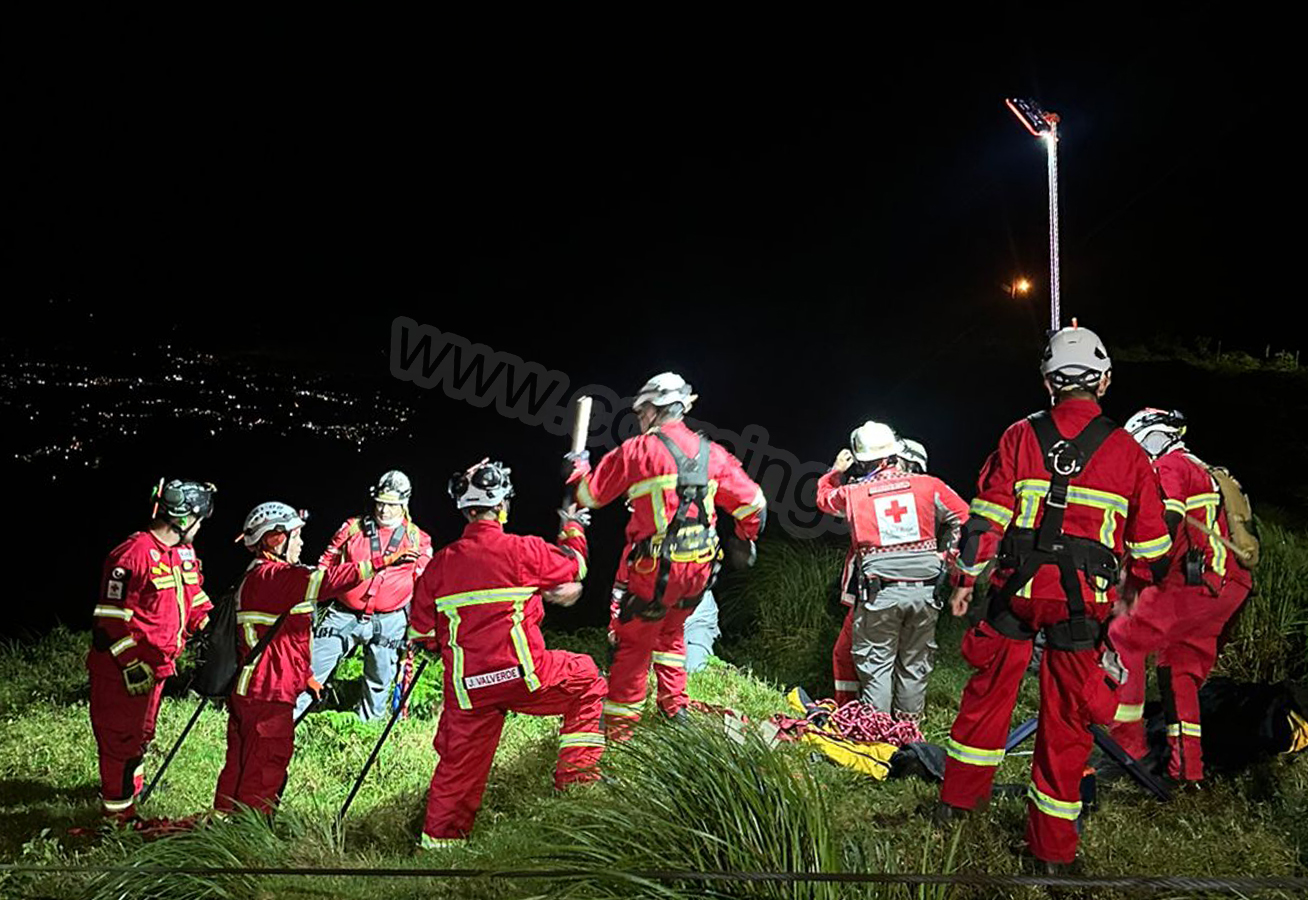
Case Study: Mobile Lighting in a Nighttime Rescue Operation — Why Deployment Speed Saves Lives
The scenario: complex terrain, zero light, no time
A nighttime emergency rescue — a stranded vehicle on a steep slope — presented the classic combination that defeats improvised lighting: complex terrain, no grid power, and a clock that starts the moment the call comes in. Rope securing and towing operations demand that every operator can see the vehicle’s posture, the rock face, and each other. Torches and vehicle headlamps don’t deliver that.
The rescue team’s answer was a coordinated deployment of three classes of mobile lighting, each matched to a role — a pattern worth studying for any emergency service, fire department, or industrial rescue team in Malaysia.
Three lights, three roles
Primary illumination — high-output tower at the operation zone
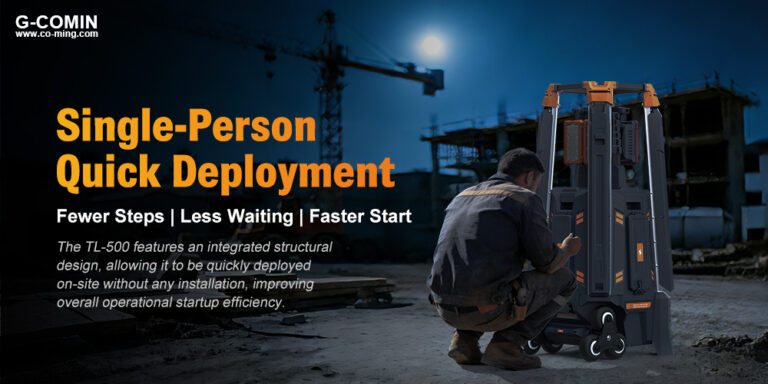
A G-COMIN TL-500 electric telescopic tower was set up as the main light source at the key operational area. Its elevated, high-intensity output illuminated the steep rock faces, slippery slopes, and the stranded vehicle itself — letting personnel assess vehicle posture and surrounding hazards and giving stable visual support for the rope securing and towing work.
Directed lighting — tripod unit at the slope top
The unlit slope-top area — where personnel assembled, equipment was staged, and ropes were laid — got a dedicated TL-300 tripod light providing directed illumination, so elevated operations could proceed safely without depending on spill from the main tower.
Area lighting — access paths and command
PL-300 area lights were positioned by the fire truck and along temporary access paths, keeping personnel movement, equipment handling, and on-site command visible and coordinated.
The real lesson: deployment speed is a capability
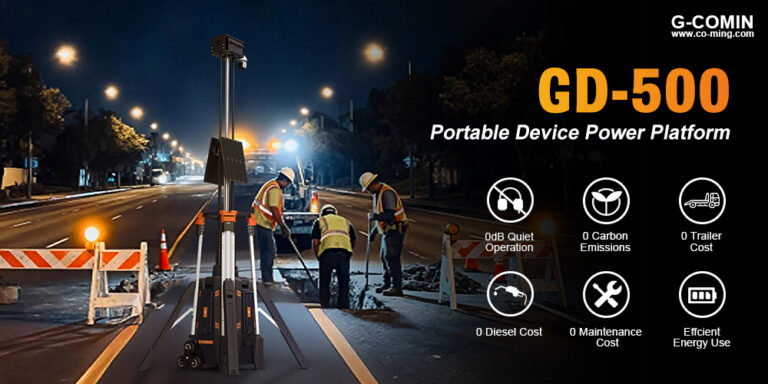
None of these lights required an electrician, a generator hookup, or cable runs. Each was carried in, deployed, and aimed in minutes by the crew on scene. In an emergency, that difference — minutes versus the better part of an hour — directly changes what the operation can attempt and how safely it proceeds. Battery-powered mobile lighting turns illumination from a logistics problem into a piece of standard kit that travels with the team.
Building the same capability in Malaysia
Riajati supplies the G-COMIN mobile lighting range in Malaysia — starting with the TL-400 Portable Light Tower (0–17,000 lm, 2.2 m mast, 20+ hour runtime, IP65) now in our Lighting catalog. The larger TL-500/TL-600 telescopic towers, TL-300 tripod lights, and PL-series area lights featured in this case study are available on request.
For fire and rescue services, JPAM/civil defence units, plantation and industrial emergency response teams, and event safety operators: talk to us about building a mobile lighting kit matched to your response scenarios.
Adapted from G-COMIN’s case study “Mobile Lighting Solutions Support Nighttime Rescue Operation” (Shenzhen Coming Technology Co., Ltd). Riajati Sdn Bhd distributes G-COMIN products in Malaysia.